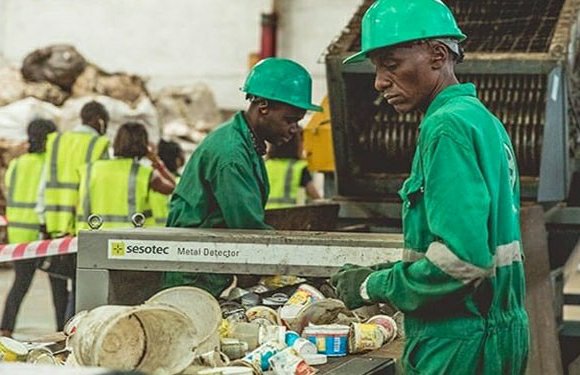
- Recycling is a vital solution to the problem of waste management and environmental degradation in Nigeria and Africa, but it faces many challenges, such as low awareness, access, and quality.
- Tech startups are using AI and robotics to make recycling more efficient, by improving sorting, processing, and end-use of recycled materials.
- These innovations have the potential to create jobs, reduce pollution, save costs, and support a circular economy.
What do you do with your waste? Do you throw it away, burn it, or bury it? Or do you recycle it, reuse it, or compost it? If you are like most Nigerians and Africans, recycling is probably not your first choice. According to the World Bank¹, only about 4 percent of waste is recycled in Sub-Saharan Africa, compared to 34 percent in OECD countries. This means that a lot of valuable materials are wasted, while landfills and dumpsites are overflowing with trash.
But what if there was a way to make recycling easier, faster, and more profitable? What if we could use technology to turn waste into wealth? That is exactly what some tech startups are doing, by using artificial intelligence (AI) and robotics to make recycling more efficient.
In this blog post, we will explore how these innovations are boosting recycling in Nigeria and Africa in 2023, and what benefits they can bring to the economy and the environment.
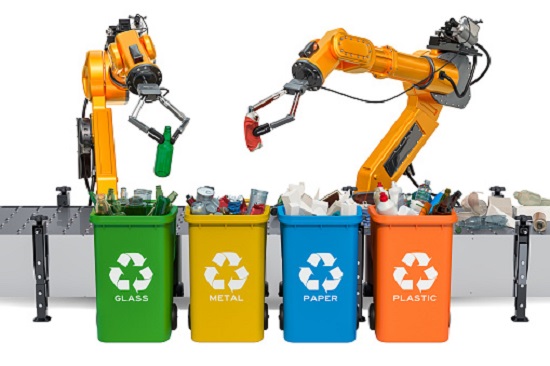
AI and Robotics for Sorting
One of the biggest challenges in recycling is sorting. Sorting is the process of separating different types of materials from each other, such as plastics, metals, paper, glass, etc. Sorting is essential for ensuring the quality and purity of recycled materials, which affects their value and end-use.
However, sorting is also a labor-intensive, costly, and error-prone task. Manual sorting requires a lot of workers, who have to deal with health and safety risks, such as exposure to hazardous substances or sharp objects. Automated sorting systems, such as optical sorters or magnets, can help reduce human intervention, but they are not always accurate or efficient. For example, they may miss some items that are too small, too dirty, or too similar in color or shape to other materials.
This is where AI and robotics come in. AI is the ability of machines to perform tasks that normally require human intelligence, such as learning, reasoning, or decision making. Robotics is the branch of engineering that deals with the design, construction, operation, and application of robots. By combining AI and robotics, tech startups are creating smart sorting systems that can identify and separate different types of materials with high accuracy and speed.
For instance, Wecyclers² is a Nigerian company that uses AI and robotics to sort plastic waste from households. Wecyclers collects plastic waste from registered users through a mobile app or SMS service. The users receive incentives such as cash or vouchers for their waste. Wecyclers then uses computer vision and machine learning to recognize different types of plastics based on their shape, color, texture, or logo. Then it uses robotic arms with suction cups to pick up and place the plastics into different bins. The system can sort up to 50 items per minute per robot², which is much faster than human workers.
RecyclePoints³, a Nigerian company, serves as another example of how AI and robotics can revolutionize waste management. By employing advanced technology, RecyclePoints effectively sorts through various types of waste collected from households. Registered users can conveniently dispose of their waste through a mobile app or SMS service, earning redeemable points as a reward. By utilizing sensors and algorithms, RecyclePoints analyzes the waste stream, distinguishing different materials based on their size, shape, weight, and composition. The company employs robotic arms equipped with grippers to efficiently sort these materials into distinct categories. Remarkably, each robot³ can sort up to 100 items per minute, surpassing the productivity of human workers.
AI and Robotics for Processing
Addressing the processing challenge in recycling is another crucial aspect where AI and robotics play a remarkable role. Processing involves multiple steps tailored to the specific material, such as cleaning, shredding, melting, extruding, molding, among others. It ensures the quality and functionality of recycled materials, affecting their marketability and usability.
Nevertheless, processing remains a complex, resource-intensive, and wasteful undertaking. The need for considerable equipment contributes to high operational costs, making it economically demanding. Additionally, processing amplifies energy consumption, furthering greenhouse gas emissions and environmental impact. Moreover, by-products generated during processing, such as dust, sludge, or emissions, pose risks to both human health and the environment.
This is where the integration of AI and robotics becomes pivotal. Leveraging these technologies, we witness the rise of intelligent processing systems developed by tech startups aimed at improving efficiency, quality, and sustainability. The application of AI and robotics empowers these systems to optimize parameters, monitor performance, and proactively prevent errors or defects.
Romco Metals offers an exemplary instance of how AI and robotics revolutionize the processing of metal waste in Nigeria. By employing these advanced technologies, Romco Metals transforms metal waste into new products with various applications in construction, medicine, and car-making. Through their proprietary melting process, controlled by AI and robotics, the company efficiently converts metal waste into liquid metal. The system smartly adjusts temperature, pressure, and flow rate, optimizing product yield and quality. This energy-efficient and eco-friendly process remarkably generates no waste or emissions.
Similarly, Ecofuture capitalizes on the power of AI and robotics to process plastic waste into new materials. Their innovative extrusion process, backed by patented technology, converts plastic waste into thermoplastic composites. AI and robotics efficiently facilitate the sorting, shredding, melting, and blending of plastic waste to create a homogeneous mixture. This sustainable process not only reduces landfill impact but also minimizes greenhouse gas emissions.
AI and Robotics for End-Use
A final challenge in recycling is end-use. End-use is the process of incorporating recycled materials into new products or applications. End-use is crucial for creating a circular economy, which is a system that minimizes waste and maximizes resource efficiency. End-use is also beneficial for reducing the demand for virgin materials, which can save costs and resources.
However, end-use is also a difficult and uncertain task. End-use requires a lot of collaboration and coordination between different stakeholders, such as recyclers, manufacturers, consumers, regulators, etc. End-use also faces a lot of barriers and risks, such as lack of standards, regulations, or incentives; low quality, performance, or durability of recycled materials; or low awareness, acceptance, or demand from consumers.
This is where AI and robotics come in. AI and robotics can help facilitate end-use by improving communication, traceability, and innovation. By using AI and robotics, tech startups are creating smart end-use systems that can connect, track, and create new products or applications with recycled materials.
For example, Recycleye is a Nigerian company that uses AI and robotics to connect recyclers with manufacturers. Recycleye uses computer vision and machine learning to identify and certify the quality and quantity of recycled materials. Then it uses blockchain technology to create a secure and transparent platform that connects recyclers with manufacturers who need recycled materials. The platform also provides data and insights on the environmental and social impact of recycling.
Another example is Replenysh, a Nigerian company that uses AI and robotics to create new products with recycled materials. Replenysh uses computer vision and machine learning to design and manufacture customized products with recycled materials, such as clothing, accessories, or furniture. Then it uses e-commerce technology to sell these products directly to consumers or businesses. The company also provides data and feedback on the customer satisfaction and loyalty of recycling.

Conclusion
Recycling is a vital solution to the problem of waste management and environmental degradation in Nigeria and Africa, but it faces many challenges, such as low awareness, access, and quality. Tech startups are using AI and robotics to make recycling more efficient, by improving sorting, processing, and end-use of recycled materials. These innovations have the potential to create jobs, reduce pollution, save costs, and support a circular economy.
If you are interested in learning more about these tech startups or how you can support recycling in your community, please visit their websites or contact them directly. You can also check out some of the resources below for more information on recycling:
- World Bank: Learn about the state of waste management in Africa and the opportunities for recycling.
- Global Recycling Day: Find out how this initiative celebrates recycling heroes around the world and promotes recycling as a key solution for sustainable development.
- African Circular Economy Network: Discover how this network connects stakeholders across Africa who are working towards a circular economy.
Recycling is not only good for the planet, but also for your wallet, your health, and your future. By using AI and robotics, tech startups are making recycling easier, faster, and more profitable than ever before. So what are you waiting for? Join the recycling revolution today!
(1) From trash to treasure: The Nigerians recycling waste into wealth. https://www.aljazeera.com/features/2021/3/18/from-trash-to-treasure-how-nigerians-recycle-waste-into-wealth.
(2) In Nigeria, finding value in waste recycling – Phys.org. https://phys.org/news/2022-09-nigeria-recycling.html.
(3) SPECIAL REPORT… A peep into Nigeria’s booming recycling industry. https://www.ripplesnigeria.com/special-report-a-peep-into-nigerias-booming-recycling-industry/.
Cover image from abdas.org
Powered by Bing

 Chibzy Tech Blog