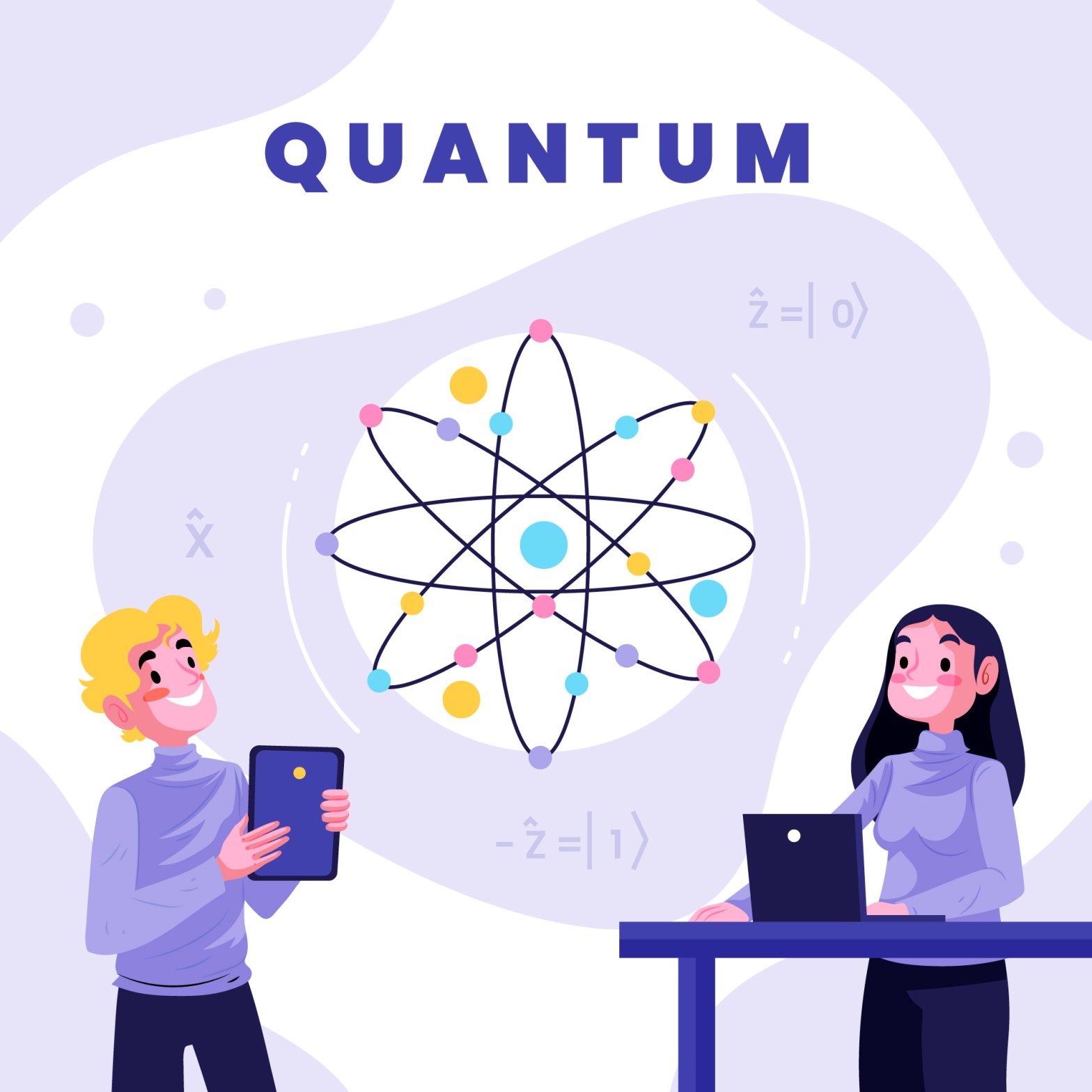
In this article, you can expect to learn:
- What quantum computing is and how it works
- Why Michio Kaku thinks quantum computing will outpace artificial intelligence
- What are the challenges and limitations of quantum computing
Artificial intelligence (AI) is one of the most powerful and influential technologies of our time. It has the potential to transform every aspect of our lives, from health care and education to entertainment and commerce. But how far can AI go? Is there a limit to what it can achieve? And what are the challenges and risks that it poses?
One of the most prominent voices in the field of AI is Michio Kaku, a theoretical physicist and futurist who has written several books on the topic. In his latest book, Quantum Supremacy: How the Quantum Computer Revolution Will Change Everything, he argues that AI is not as smart as we think it is, and that quantum computing will be the key to unlocking its true potential.
What is quantum computing?
Quantum computing is an emerging technology that uses the principles of quantum mechanics to perform calculations that are impossible or impractical for classical computers. Unlike classical computers, which use bits that can only be in one of two states (0 or 1), quantum computers use qubits that can be in multiple states at the same time. This allows them to process information in parallel, rather than sequentially, and to explore a vast number of possibilities in a fraction of the time.
Quantum computers are not meant to replace classical computers, but rather to complement them and solve problems that are beyond their reach. Some of the applications that quantum computing could enable include:
- Cryptography: Quantum computers could break the encryption schemes that secure our online transactions and communications, but they could also create new ones that are more secure and resistant to hacking.
- Optimization: Quantum computers could find the optimal solutions for complex problems that involve many variables and constraints, such as scheduling, logistics, and resource allocation.
- Machine learning: Quantum computers could enhance the performance and accuracy of machine learning algorithms, which are used for tasks such as image recognition, natural language processing, and recommendation systems.
- Simulation: Quantum computers could simulate the behavior of physical systems that are too complex or chaotic for classical computers, such as molecular dynamics, quantum chemistry, and climate modeling.
How does quantum computing relate to AI?
AI is a broad term that encompasses various subfields and techniques, such as deep learning, computer vision, natural language processing, speech recognition, and chatbots. These techniques rely on large amounts of data and computational power to learn from patterns and make predictions or decisions.
However, Kaku argues that AI is not truly intelligent, but rather a collection of “glorified tape recorders” that mimic human behavior by splicing together snippets of information from the web. He says that AI chatbots, for example, cannot discern true from false, or generate original content. They can only repeat what humans have already written.
Kaku believes that quantum computing could change this situation by enabling AI to access a higher level of intelligence and creativity. He says that quantum computing could allow AI to explore a multiverse of possibilities and generate novel solutions or insights. He also says that quantum computing could help AI overcome some of the limitations and challenges that it faces today, such as:
- Data scarcity: Quantum computers could generate synthetic data or augment existing data to improve the quality and diversity of the training sets for machine learning algorithms.
- Data privacy: Quantum computers could encrypt or anonymize sensitive data without compromising its utility for machine learning algorithms.
- Explainability: Quantum computers could provide more transparent and interpretable explanations for the decisions or actions of machine learning algorithms.
- Bias: Quantum computers could detect and correct bias or discrimination in machine learning algorithms or data sets.
What are the challenges and risks of quantum computing?
Quantum computing is not a magic bullet that will solve all our problems or make AI perfect. It is still a nascent and experimental technology that faces many technical and practical challenges, such as:
- Scalability: Quantum computers require a large number of qubits to perform complex calculations, but creating and maintaining qubits is difficult and costly. Qubits are also prone to errors and noise due to environmental interference or decoherence.
- Programming: Quantum computers require new algorithms and languages that are different from those used for classical computers. Developing and testing these algorithms is challenging and time-consuming.
- Integration: Quantum computers need to work with classical computers and other devices in a seamless and efficient way. This requires new standards and protocols for communication and interoperability.
- Accessibility: Quantum computers are currently available only to a few organizations or institutions that have the resources and expertise to build or use them. This creates a gap between those who have access to quantum computing and those who do not.
Quantum computing also poses some ethical and social risks, such as:
- Security: Quantum computers could threaten the security of our online systems and networks by breaking the encryption schemes that protect them. This could expose our personal or confidential information to hackers or malicious actors.
- Disruption: Quantum computers could disrupt various industries and sectors by creating new opportunities or challenges for innovation and competition. This could affect the jobs and livelihoods of many people and create winners and losers in the market.
- Responsibility: Quantum computers could increase the responsibility and accountability of those who use or develop them, especially when they are applied to critical or sensitive domains, such as health care, finance, or defense. This requires clear and consistent guidelines and regulations for the ethical and safe use of quantum computing.
Conclusion
Quantum computing is a fascinating and promising technology that could transform the field of AI and many other aspects of our lives. However, it is not a simple or easy technology that will solve all our problems or make AI flawless. It is a complex and challenging technology that requires careful and responsible development and use. It is also a technology that will not replace human intelligence or creativity, but rather enhance and complement them.
References
(1) AI fears overblown? Theoretical physicist calls chatbots ‘glorified …. https://www.cnn.com/2023/08/13/business/ai-quantum-computer-kaku/index.html.
(2) How quantum computing could change everything everywhere – GeekWire. https://www.geekwire.com/2023/quantum-computing-michio-kaku/.
(3) Physicist Michio Kaku exposes ‘dangerous’ side of AI chatbots. https://nypost.com/2023/05/04/physicist-michio-kaku-exposes-dangerous-side-of-ai-chatbots/.
Powered by bing

 Chibzy Tech Blog