In recent years, the world has witnessed a dramatic rise in the popularity and adoption of cryptocurrencies. Bitcoin, the most well-known cryptocurrency, has experienced significant price volatility, leading to a growing interest in predicting its future prices. Artificial Intelligence (AI) has emerged as a powerful tool in various aspects of our lives, and many wonder if it could also be used to accurately predict the future prices of cryptocurrency. In this article, I’ll explore the possibilities and limitations of AI in forecasting cryptocurrency prices.
Understanding AI and Cryptocurrency
Artificial Intelligence refers to the simulation of human intelligence in machines that are programmed to think and behave like humans. On the other hand, cryptocurrency is a digital or virtual form of currency that relies on cryptography for secure transactions and operates independently of a central bank. While AI and cryptocurrency may not seem directly related, the connection lies in the potential for AI algorithms to analyze vast amounts of data and identify patterns that could potentially be used to forecast future cryptocurrency prices.
AI has been employed in various financial sectors, including stock market prediction and algorithmic trading. Through advanced machine learning algorithms, AI can analyze historical data, identify patterns, and make predictions based on those patterns. However, predicting the future prices of cryptocurrency is a more complex challenge due to several factors like market sentiment, regulatory changes, and technological advancements. While AI today might not be able predict with complete accuracy, it has the potential to offer valuable insights and increase the probability of making more informed investment decisions.
Analyzing Historical Data
One way in which AI can contribute to predicting future cryptocurrency prices is by analyzing historical data. By examining past prices, trading volumes, and other market indicators, AI algorithms can identify patterns and trends. These patterns can offer valuable insight into potential future price movements. The more comprehensive the historical data available, the more accurate the predictions could be. However, it is important to note that cryptocurrency markets are highly volatile, and past performance does not guarantee future results.
Incorporating External Factors
Apart from historical data, AI can also consider external factors that might influence cryptocurrency prices. These factors include global economic trends, market sentiment, regulatory news, and technological advancements. By analyzing news articles, social media posts, and other relevant information, AI algorithms can gauge market sentiment and identify potential correlations between these external factors and cryptocurrency prices. While AI can incorporate these factors into its analysis, it is still important to remember that unexpected events and black swan events can disrupt even the most sophisticated predictions.
While AI shows promise in predicting future cryptocurrency prices, it is not without its limitations and challenges. One of the key challenges is the lack of quality data. Cryptocurrency markets are relatively new, and historical data is limited compared to other financial markets. Moreover, the market is decentralized, making it difficult to obtain accurate and comprehensive data. Additionally, the highly volatile nature of cryptocurrency markets and the influence of human psychology create additional challenges for AI algorithms to accurately predict future prices.
Conclusion
While AI possesses immense potential in predicting cryptocurrency prices, complete accuracy is yet to be achieved due to the complexity and volatility of the cryptocurrency market. The use of AI algorithms can provide valuable insights and increase the probability of making informed investment decisions. However, it is important to consider that predictions are never foolproof, and the future of cryptocurrency prices will always remain uncertain. As the field of AI continues to evolve and more quality data becomes available, AI may eventually play a more significant role in predicting cryptocurrency prices, but until then, it is crucial to approach these predictions with caution and consider them as just one of many tools to make financial decisions.
If you have any comment to make about this post or point of correction, kindly go down to the comment section and make your point, it would be appreciated. Also if you find it interesting, it would be kind of you to like and share. Thanks for reading.
In the realm of technology and art, two powerful forces converge in an extraordinary union: generative Artificial Intelligence (AI) and art. This captivating fusion combines the boundless creativity of artists with the limitless potential of AI, paving the way for groundbreaking innovation and the emergence of an exciting new frontier: AI art. In this article, we delve into the reasons why generative AI and art form a perfect blend for good, harnessing the power of technology to redefine artistic expression and inspire awe-inspiring creations.
Here is a brief summary of this post:
Generative AI and art form an unparalleled duo, intertwining creativity and innovation.
This article explores the synergistic relationship between generative AI and art, highlighting how it fuels the emergence of groundbreaking AI art.
Discover the transformative power of generative AI in art creation and its significant impact on the future of artistic expression.
Enhancing Creativity through Generative AI
Generative AI empowers artists by providing them with a new tool to amplify their creative capabilities. By utilizing AI algorithms, artists can explore uncharted territory, unlock new ideas, and break free from conventional artistic boundaries. AI algorithms can analyze and interpret vast amounts of data, enabling artists to gain fresh insights, discover hidden patterns, and create aesthetically pleasing art that pushes the limits of imagination.
Fostering Innovation in Art
Generative AI not only enhances existing artistic techniques but also encourages the development of entirely novel approaches. Through machine learning algorithms and deep neural networks, artists can leverage generative AI to create art that is beyond human imagination. This innovative intersection gives birth to unique and awe-inspiring art forms, pushing the boundaries of what is considered possible.
AI Art: A Testament to Generative AI’s Potential
The rise of AI art is testament to the transformative power of generative AI. AI algorithms have the capacity to generate autonomous art pieces or collaborate with human artists to co-create stunning works of art. This fusion of AI and human creativity brings forth a new realm of artistry, allowing for endless experimentation, the blending of styles, and the exploration of uncharted artistic territories.
Redefining Audience Engagement
Generative AI enables artists to forge deep connections with their audience by presenting them with artworks that challenge their perceptions and evoke profound emotions. The unique nature of AI-generated art captivates viewers, making them both participants and spectators, as they contemplate the human-AI collaboration that birthed these masterpieces. This engagement sparks conversations and opens doors to explore new dimensions of artistic appreciation.
Paving the Way to the Future of Art
The fusion of generative AI and art has far-reaching implications for the future of artistic expression and creation. As generative AI continues to advance, artists will have access to even more powerful tools to explore the depths of imagination. This symbiotic relationship between AI and art holds immense potential for creating art that transcends the boundaries of what was previously imaginable.
Conclusion
Generative AI and art harmonize in perfect synergy, catalyzing creativity, fostering innovation, and redefining the artistic landscape. The transformative power of generative AI in art creation fuels the emergence of groundbreaking AI art, captivating audiences with its ability to push the boundaries of human imagination. As the journey continues, we can only anticipate the remarkable artistic achievements that this extraordinary blend will bring forth, forever transforming the realm of art and pointing towards an exciting future of possibilities.
If you have an inspiring comment to make about this post or you have a point of correction, kindly go down to the comment section and make your point, it would be appreciated.
Also if you find it interesting, it would be kind of you to like and share. Thanks for reading.
In today’s fast-paced world, artificial intelligence (AI) has become an integral part of various industries, revolutionizing the way we work and live. However, as AI becomes more complex and increasingly autonomous, there is a growing need for transparency and accountability. This is where Explainable AI (XAI) comes into play. In this blog post, we will delve into the concept of Explainable AI, highlighting its significance, benefits, and practical applications.
This post covers the following:
The growing prominence of AI calls for Explainable AI.
Explainable AI fosters transparency, accountability, and trust.
Machine learning interpretability techniques analyze and decipher AI models.
Regulations and ethical considerations promote responsible AI deployments.
The benefits of Explainable AI extend to diverse industries and applications.
Explainable AI Brings Clarity to Models: A substantial challenge with complex AI models lies in their inherent opacity, making it difficult to understand the reasoning behind their decisions. Explainable AI methods address this issue by revealing the decision-making processes and uncovering the factors that influence the model’s outputs.
Fostering Transparency, Accountability, and Trust: Transparent AI ensures that the decision-making logic is readily understandable and traceable. This transparency enables stakeholders to identify any flaws, biases, or discriminatory patterns in the model, enhancing accountability. With insights into how AI models function, trust can be established, encouraging greater adoption and acceptance of AI-driven solutions.
Techniques for Achieving Explainable AI
Model Interpretability Techniques: Techniques like LIME (Local Interpretable Model-Agnostic Explanations), SHAP (Shapley Additive Explanations), and LRP (Layer-wise Relevance Propagation) provide methods for understanding and explaining the inner workings of AI models. These interpretability techniques help to uncover the specific features that most strongly influence the model’s predictions.
Rule Extraction: Rule extraction aims to transform complex AI models into more understandable rule-based systems. This process distills the critical patterns and decision rules used by the model, delivering a simplified representation of the underlying logic.
Responsible Deployment of Explainable AI
Regulations and Ethical Considerations: Regulatory frameworks and ethical guidelines are emerging to ensure responsible AI deployment. These regulations emphasize the necessity of Explainable AI in high-stakes domains to avoid potential risks and ensure fairness, accountability, and transparency.
Continuous Monitoring and Auditing: Implementing mechanisms for continuous monitoring and auditing of AI models and their decisions is crucial. Regular evaluation and validation of these models are necessary to detect any biases, evaluate their unintended consequences, and rectify any potential issues promptly.
The Wide-Ranging Benefits of Explainable AI
In Healthcare: Explainable AI finds applications in healthcare by enhancing diagnostic accuracy, prognosis prediction, and treatment recommendation systems. It enables healthcare professionals to understand the underlying reasoning of AI models, making them valuable allies in decision-making processes.
In Finance: In the finance sector, Explainable AI offers transparency in risk assessment models, aiding financial institutions in making informed decisions. It also improves fraud detection systems by illuminating the factors contributing to suspicious activities, allowing for prompt and accurate identification.
In Customer Service: Explainable AI enables customer service applications to provide personalized experiences. Through transparent AI models, businesses can understand customer preferences, sentiments, and behavior, leading to tailored recommendations and improved customer satisfaction.
Conclusion:
The advent of Explainable AI empowers organizations and individuals alike to comprehend the intricate decisions made by AI models. By enabling transparency, accountability, and trust, Explainable AI brings AI out of the black box and into the realm of human understanding. As regulations and ethical guidelines continue to evolve, the responsible deployment of Explainable AI will ensure that we harness the immense potential of AI while safeguarding against its unintended consequences.
Please if you have any comment to make about this post or point of correction, kindly go down to the comment section and make your point, it would be appreciated.
Also if you find it interesting, it would be kind of you to like and share. Thanks for reading.
Artificial intelligence has been reshaping numerous aspects of our lives, from the way we communicate to the way we conduct business. However, as AI technology advances, concerns are rising about the potential implications it may have on elections. In particular, the advent of AI-generated images has sparked worries about the veracity and credibility of electoral processes. This article aims to delve into the ramifications of AI-generated images on elections and the need for vigilance in maintaining the integrity of democratic systems.
Here is a brief summary of this post
AI-generated images can have a significant impact on elections.
These images can be used to create fake news and misleading propaganda.
AI-generated images can manipulate public perception and undermine trust in the electoral process.
They may be employed to spread misinformation, influence voter behavior, and sway election outcomes.
Addressing the potential consequences of AI-generated images is crucial for upholding the integrity of elections.
The Rise of AI-Generated Images
AI-generated images, also known as deepfakes, are digitally manipulated content that convincingly depict individuals saying or doing things they never actually did. These images are created using sophisticated AI algorithms capable of synthesizing realistic visuals that often become indistinguishable from reality. With the rapid advancement of AI technology, the creation and dissemination of such images have become increasingly accessible, leading to concerns about their potential misuse during electoral campaigns.
Misinformation and Manipulation
The foremost concern stemming from AI-generated images is the potential for misinformation and manipulation. Politicians could be targeted with deepfake videos or images that portray them engaging in scandalous or compromising activities. These fabricated visuals can easily go viral, rapidly shaping public perception and ultimately influencing election outcomes. The impact of such disinformation campaigns on the electorate’s decision-making process cannot be underestimated.
Discrediting Authentic Evidence
AI-generated images not only pose a threat to politicians but also to the democratic process as a whole. As the technology advances, the ability to create false evidence, including forged documents, manipulated images, or videos, becomes more sophisticated. This can erode the trust in genuine evidence and impartial reporting, leading to widespread cynicism and confusion. When the lines between truth and fiction blur, the integrity of elections is fundamentally undermined.
Challenges for Fact-Checkers
Given the scale and speed at which AI-generated images can be created and disseminated, fact-checkers face an uphill battle in detecting and debunking deepfakes. Traditional mechanisms of fact-checking may struggle to keep up with the rapidly evolving advancements in AI technology. The spread of false narratives can occur before authenticating bodies can verify their accuracy, leading to lasting distrust among the public.
Safeguarding Electoral Integrity
To combat the potential harm caused by AI-generated images, proactive measures must be taken. Firstly, significant investments in research and development are necessary to enhance detection technologies, enabling faster and more accurate identification of manipulated content. Policymakers and technology companies must collaborate to set up robust frameworks and regulations to address the growing threat of disinformation campaigns.
Additionally, raising public awareness about the existence and potential impact of AI-generated images is crucial. By educating the electorate about the risks, individuals can become more discerning consumers of information and less susceptible to manipulation. Moreover, strengthening media literacy programs and promoting digital citizenship will enable voters to critically evaluate the credibility of sources.
Conclusion
AI-generated images present significant challenges to the integrity of electoral processes worldwide. The rapid advancement of AI technology calls for immediate attention to mitigate the risks posed by deepfakes. The potential for misinformation, the discrediting of genuine evidence, and the challenges faced by fact-checkers highlight the urgent need for collaborative efforts between technology companies, policymakers, and the public to safeguard the democratic foundations upon which our societies are built. Only by staying vigilant and proactive can we ensure that elections remain fair, transparent, and unquestionably democratic.
References: 1. NewsBytes. AI-generated images may impact elections. Here’s why. Available at: [Link] 2. Robots.net. How will AI-generated images impact elections? Available at: [Link] 3. TechCrunch. (2023, September 8). How badly will AI-generated images impact elections? Available at: [Link]
Why Michio Kaku thinks quantum computing will outpace artificial intelligence
What are the challenges and limitations of quantum computing
Artificial intelligence (AI) is one of the most powerful and influential technologies of our time. It has the potential to transform every aspect of our lives, from health care and education to entertainment and commerce. But how far can AI go? Is there a limit to what it can achieve? And what are the challenges and risks that it poses?
One of the most prominent voices in the field of AI is Michio Kaku, a theoretical physicist and futurist who has written several books on the topic. In his latest book, Quantum Supremacy: How the Quantum Computer Revolution Will Change Everything, he argues that AI is not as smart as we think it is, and that quantum computing will be the key to unlocking its true potential.
What is quantum computing?
Quantum computing is an emerging technology that uses the principles of quantum mechanics to perform calculations that are impossible or impractical for classical computers. Unlike classical computers, which use bits that can only be in one of two states (0 or 1), quantum computers use qubits that can be in multiple states at the same time. This allows them to process information in parallel, rather than sequentially, and to explore a vast number of possibilities in a fraction of the time.
Quantum computers are not meant to replace classical computers, but rather to complement them and solve problems that are beyond their reach. Some of the applications that quantum computing could enable include:
Cryptography: Quantum computers could break the encryption schemes that secure our online transactions and communications, but they could also create new ones that are more secure and resistant to hacking.
Optimization: Quantum computers could find the optimal solutions for complex problems that involve many variables and constraints, such as scheduling, logistics, and resource allocation.
Machine learning: Quantum computers could enhance the performance and accuracy of machine learning algorithms, which are used for tasks such as image recognition, natural language processing, and recommendation systems.
Simulation: Quantum computers could simulate the behavior of physical systems that are too complex or chaotic for classical computers, such as molecular dynamics, quantum chemistry, and climate modeling.
How does quantum computing relate to AI?
Image by Freepik
AI is a broad term that encompasses various subfields and techniques, such as deep learning, computer vision, natural language processing, speech recognition, and chatbots. These techniques rely on large amounts of data and computational power to learn from patterns and make predictions or decisions.
However, Kaku argues that AI is not truly intelligent, but rather a collection of “glorified tape recorders” that mimic human behavior by splicing together snippets of information from the web. He says that AI chatbots, for example, cannot discern true from false, or generate original content. They can only repeat what humans have already written.
Kaku believes that quantum computing could change this situation by enabling AI to access a higher level of intelligence and creativity. He says that quantum computing could allow AI to explore a multiverse of possibilities and generate novel solutions or insights. He also says that quantum computing could help AI overcome some of the limitations and challenges that it faces today, such as:
Data scarcity: Quantum computers could generate synthetic data or augment existing data to improve the quality and diversity of the training sets for machine learning algorithms.
Data privacy: Quantum computers could encrypt or anonymize sensitive data without compromising its utility for machine learning algorithms.
Explainability: Quantum computers could provide more transparent and interpretable explanations for the decisions or actions of machine learning algorithms.
Bias: Quantum computers could detect and correct bias or discrimination in machine learning algorithms or data sets.
What are the challenges and risks of quantum computing?
Quantum computing is not a magic bullet that will solve all our problems or make AI perfect. It is still a nascent and experimental technology that faces many technical and practical challenges, such as:
Scalability: Quantum computers require a large number of qubits to perform complex calculations, but creating and maintaining qubits is difficult and costly. Qubits are also prone to errors and noise due to environmental interference or decoherence.
Programming: Quantum computers require new algorithms and languages that are different from those used for classical computers. Developing and testing these algorithms is challenging and time-consuming.
Integration: Quantum computers need to work with classical computers and other devices in a seamless and efficient way. This requires new standards and protocols for communication and interoperability.
Accessibility: Quantum computers are currently available only to a few organizations or institutions that have the resources and expertise to build or use them. This creates a gap between those who have access to quantum computing and those who do not.
Quantum computing also poses some ethical and social risks, such as:
Security: Quantum computers could threaten the security of our online systems and networks by breaking the encryption schemes that protect them. This could expose our personal or confidential information to hackers or malicious actors.
Disruption: Quantum computers could disrupt various industries and sectors by creating new opportunities or challenges for innovation and competition. This could affect the jobs and livelihoods of many people and create winners and losers in the market.
Responsibility: Quantum computers could increase the responsibility and accountability of those who use or develop them, especially when they are applied to critical or sensitive domains, such as health care, finance, or defense. This requires clear and consistent guidelines and regulations for the ethical and safe use of quantum computing.
Conclusion
Quantum computing is a fascinating and promising technology that could transform the field of AI and many other aspects of our lives. However, it is not a simple or easy technology that will solve all our problems or make AI flawless. It is a complex and challenging technology that requires careful and responsible development and use. It is also a technology that will not replace human intelligence or creativity, but rather enhance and complement them.
Artificial Intelligence (AI) has transformed various aspects of our lives, revolutionizing industries, communication, and education. However, the integration of AI-powered systems like ChatGPT in academic settings has raised concerns regarding academic integrity and the potential for cheating. In this blog article, we will explore the different perspectives and arguments surrounding the use of AI in education and how it can be perceived as cheating.
The Rise of AI Assistance in Education
Image by zinkevych
In recent years, the educational landscape has been marked by the growing popularity of AI-powered tools, such as ChatGPT, as a means to assist students in their academic endeavors. The convenience and accessibility of these tools have made them appealing to many students; however, their use is not without controversy.
The Perception of AI as Cheating
Image by freepik
Redefining Traditional Methods: Using AI for completing assignments or exams seems to challenge the traditional definition of academic work, where individual effort, critical thinking, and independent learning are highly valued. Utilizing AI tools can blur the line between the student’s own work and the work generated by the AI system, raising concerns about academic integrity.
Unfair Advantage: The use of AI-powered systems in academia can create an uneven playing field, as not all students may have equal access to these tools. This raises concerns about fairness and equity, highlighting the potential advantages enjoyed by students with access to AI tools compared to those who do not.
Preserving Academic Integrity and Learning
Educational Objectives: The primary goal of education is to promote learning, personal growth, and skill development. Relying heavily on AI-powered systems may hinder the development of critical thinking, problem-solving abilities, and other essential skills that are expected from students.
Detrimental Impact on Knowledge Acquisition: While AI tools can provide accurate and immediate answers, they may discourage students from engaging in deep learning experiences and exploring different perspectives. Genuine understanding and knowledge retention can be compromised when students heavily rely on AI tools without actively participating in the learning process.
Addressing the Challenges
Raising Awareness: Educational institutions should proactively educate students about the potential risks, ethical implications, and consequences associated with the misuse of AI tools. By fostering a culture of academic integrity, students can make informed decisions regarding the responsible use of AI.
Enhancing Pedagogy: Teachers can integrate AI tools into the educational process in a way that promotes critical thinking and creativity, rather than solely relying on them for answers. By designing assignments and assessments that require deeper analysis, original thought, and genuine engagement, teachers can mitigate the risk of AI-enabled cheating.
Conclusion
The integration of AI in education has sparked a heated debate regarding cheating. While AI tools can offer valuable assistance, they also challenge the traditional notions of academic integrity and learning. It is crucial for educational institutions, students, and faculty to engage in an ongoing conversation to strike a balance between utilizing AI for educational benefits and preserving the core values of academia.
Remember, it is essential to maintain academic honesty and integrity in the pursuit of knowledge, even in this AI-enabled era of education.
Have you ever wondered how nature can inspire and improve technology?
If you have, you’re not alone. Many scientists and engineers are fascinated by the amazing abilities of biological systems, such as ants, bees, birds, fish, and even plants, to communicate and cooperate with each other.
These systems can perform complex tasks, such as finding food, building nests, migrating, and defending themselves, with remarkable efficiency and robustness. They can also adapt to changing environments and cope with uncertainties and disturbances.
What if we could learn from these natural systems and apply their principles to design and optimize wireless networks?
That’s the idea behind bio-inspired networking, a new paradigm for tech innovation that aims to create wireless networks that are more intelligent, resilient, scalable, and energy-efficient.
In this post, you’ll discover:
What is bio-inspired networking and how does it work?
What are the benefits and challenges of bio-inspired networking?
What are some examples and applications of bio-inspired networking?
How can you get started with bio-inspired networking?
Ready to explore this exciting field? Let’s dive in.
What is Bio-inspired Networking and How Does it Work?
Bio-inspired networking is a field that studies how biological systems communicate and cooperate, and applies the principles to design and optimize wireless networks.
Wireless networks are composed of nodes (such as sensors, devices, or vehicles) that can exchange information without wires. Wireless networks have many applications, such as smart cities, internet of things, autonomous vehicles, and mobile communications.
However, wireless networks also face many challenges, such as limited resources (such as bandwidth, power, and memory), interference, congestion, security threats, and dynamic topology (meaning the nodes can move or join or leave the network).
To overcome these challenges, wireless networks need to have certain properties, such as:
Self-organization: The ability to form and maintain a network structure without central control or pre-defined rules.
Self-healing: The ability to detect and recover from failures or attacks without human intervention.
Self-optimization: The ability to adjust the network parameters (such as routing, power control, or spectrum allocation) to improve the network performance (such as throughput, delay, or reliability).
Self-learning: The ability to learn from the network environment and the network behavior to improve the network intelligence.
Bio-inspired networking borrows these properties from biological systems that have evolved over millions of years to survive and thrive in complex and uncertain situations.
Bio-inspired networking uses various techniques, such as:
Bio-inspired algorithms: Algorithms that mimic the behavior or mechanisms of biological systems, such as ant colony optimization (ACO), particle swarm optimization (PSO), artificial neural networks (ANN), genetic algorithms (GA), or artificial immune systems (AIS).
Bio-inspired models: Models that capture the characteristics or dynamics of biological systems, such as cellular automata (CA), random Boolean networks (RBN), or complex networks (CN).
Bio-inspired protocols: Protocols that implement the bio-inspired algorithms or models in wireless networks, such as bio-routing protocols (that use ACO or PSO to find optimal paths), bio-spectrum protocols (that use GA or AIS to allocate spectrum resources), or bio-security protocols (that use ANN or CA to detect and prevent attacks).
What are the Benefits and Challenges of Bio-inspired Networking?
Bio-inspired networking has many benefits for wireless networks. Some of them are:
Improved performance: Bio-inspired networking can improve the network performance by finding optimal or near-optimal solutions for various network problems.
Enhanced robustness: Bio-inspired networking can enhance the network robustness by tolerating failures or attacks and maintaining network functionality.
Increased scalability: Bio-inspired networking can increase the network scalability by handling large numbers of nodes or high traffic demands without degrading network quality.
Reduced complexity: Bio-inspired networking can reduce the network complexity by simplifying the network design and operation without requiring central control or global information.
Lower cost: Bio-inspired networking can lower the cost by saving network resources (such as power or bandwidth) or reducing human intervention.
However, bio-inspired networking also has some challenges. Some of them are:
Lack of theoretical foundations: Bio-inspired networking lacks rigorous theoretical foundations that can explain why and how bio-inspired techniques work for wireless networks.
Difficulty of validation: Bio-inspired networking is difficult to validate by experiments or simulations due to the high complexity and variability of wireless networks and biological systems.
Trade-off between realism and simplicity: Bio-inspired networking faces a trade-off between realism and simplicity when modeling biological systems or wireless networks. Too realistic models may be too complex to analyze or implement. Too simple models may lose essential features or behaviors.
Ethical and social issues: Bio-inspired networking may raise ethical and social issues, such as privacy, security, or human dignity, when applying biological concepts or methods to wireless networks.
What are Some Examples and Applications of Bio-inspired Networking?
Bio-inspired networking has many examples and applications in various domains of wireless networks. Here are some of them:
Wireless sensor networks (WSNs): WSNs are networks of small and low-power nodes that can sense, process, and communicate data about the physical environment. Bio-inspired networking can help WSNs to achieve self-organization, self-healing, self-optimization, and self-learning. For instance, ACO can be used to find energy-efficient paths for data transmission². PSO can be used to optimize the node placement or coverage³. ANN can be used to classify or predict the sensed data. GA can be used to schedule the node activity or duty cycle.
Mobile ad hoc networks (MANETs): MANETs are networks of mobile nodes that can communicate without fixed infrastructure or central authority. Bio-inspired networking can help MANETs to cope with dynamic topology, interference, congestion, and security threats. For example, ACO can be used to find stable and reliable paths for data delivery. PSO can be used to optimize the network connectivity or capacity. AIS can be used to detect and prevent malicious attacks or intrusions. CA can be used to model the network behavior or evolution.
Vehicular ad hoc networks (VANETs): VANETs are networks of vehicles that can communicate with each other or with roadside infrastructure. Bio-inspired networking can help VANETs to improve traffic safety, efficiency, and comfort. For instance, ACO can be used to find optimal routes for navigation or congestion avoidance. PSO can be used to optimize the vehicle platooning or formation. ANN can be used to predict the traffic conditions or driver behavior. GA can be used to allocate the spectrum resources or channel access.
How Can You Get Started with Bio-inspired Networking?
If you’re interested in learning more about bio-inspired networking, here are some resources that can help you get started:
Books: There are several books that provide comprehensive introductions to bio-inspired networking, such as:
Bio-Inspired Computing and Networking by Yang et al.
Bio-Inspired Computing and Communication Networks by Das et al.
Bio-Inspired Networking by Dressler and Akan
Journals: There are several journals that publish high-quality research papers on bio-inspired networking, such as:
IEEE Transactions on Network Science and Engineering
IEEE Transactions on Cognitive Communications and Networking
IEEE/ACM Transactions on Networking
Conferences: There are several conferences that provide platforms for researchers and practitioners to present and discuss their latest findings on bio-inspired networking, such as:
International Conference on Bio-inspired Information and Communications Technologies (BICT)
International Conference on Bio-Inspired Models of Network, Information, and Computing Systems (BIONETICS)
International Conference on Swarm Intelligence (ICSI)
Conclusion
Bio-inspired networking is a new paradigm for tech innovation that aims to create wireless networks that are more intelligent, resilient, scalable, and energy-efficient.
Bio-inspired networking studies how biological systems communicate and cooperate, and applies the principles to design and optimize wireless networks.
Bio-inspired networking has many benefits for wireless networks, such as improved performance, enhanced robustness, increased scalability, reduced complexity, and lower cost.
Bio-inspired networking also has some challenges, such as lack of theoretical foundations, difficulty of validation, trade-off between realism and simplicity, and ethical and social issues.
Bio-inspired networking has many examples and applications in various domains of wireless networks, such as wireless sensor networks, mobile ad hoc networks, and vehicular ad hoc networks.
Bio-inspired networking is a fascinating and promising field that offers many opportunities for research and innovation.
If you want to learn more about bio-inspired networking, you can check out the books, journals, conferences, and other resources mentioned in this post.
We hope you enjoyed this post and learned something new about bio-inspired networking.
If you did, please share it with your friends or colleagues who might be interested in this topic.
And if you have any questions or comments about bio-inspired networking, please leave them below. We’d love to hear from you.
Now it’s your turn.
What do you think about bio-inspired networking? Have you ever used or encountered any bio-inspired techniques or applications in wireless networks? Do you have any suggestions or feedback for improving bio-inspired networking?
Please let us know in the comments section below. We appreciate your input and participation.
Generative models are artificial intelligence systems that can produce novel and realistic content, such as text, images, audio, or video, based on some input or prompt. For example, a generative model can write a story given a title, draw a picture given a description, or compose a song given a genre.
However, not all prompts are equally effective in stimulating the creativity and diversity of generative models. Some prompts may result in bland, repetitive, or irrelevant outputs, while others may trigger more original, varied, and engaging outputs. How can we design prompts that elicit creative and diverse responses from generative models?
There are several techniques and principles that can help us craft better prompts for generative models. Here are some of them:
Use open-ended questions. Open-ended questions are questions that do not have a single or simple answer, but rather invite multiple or complex answers. For example, instead of asking “What is the capital of France?”, which has a straightforward answer (Paris), we can ask “What are some interesting facts about Paris?”, which can generate many different and interesting answers. Open-ended questions can encourage generative models to explore more possibilities and generate more diverse outputs.
Provide examples. Examples are instances or samples of the desired output or content. For example, if we want a generative model to write a poem, we can provide an example of a poem that we like or that matches our criteria. Examples can help generative models to understand the format, style, tone, or theme of the output we want, and also inspire them to create similar or related outputs.
Add constraints. Constraints are limitations or rules that restrict the output or content in some way. For example, if we want a generative model to write a story, we can add constraints such as the genre, the setting, the characters, the plot points, or the word limit. Constraints can help generative models to focus on specific aspects or elements of the output we want, and also challenge them to generate outputs that satisfy the constraints while being creative and diverse.
These are some of the techniques and principles that can help us design prompts that elicit creative and diverse responses from generative models. Of course, there are many other factors that can affect the quality and quantity of the outputs generated by generative models, such as the data they are trained on, the algorithms they use, or the parameters they have. However, by applying these techniques and principles to our prompts, we can improve our chances of getting more creative and diverse outputs from generative models.
Recycling is a vital solution to the problem of waste management and environmental degradation in Nigeria and Africa, but it faces many challenges, such as low awareness, access, and quality.
Tech startups are using AI and robotics to make recycling more efficient, by improving sorting, processing, and end-use of recycled materials.
These innovations have the potential to create jobs, reduce pollution, save costs, and support a circular economy.
What do you do with your waste? Do you throw it away, burn it, or bury it? Or do you recycle it, reuse it, or compost it? If you are like most Nigerians and Africans, recycling is probably not your first choice. According to the World Bank¹, only about 4 percent of waste is recycled in Sub-Saharan Africa, compared to 34 percent in OECD countries. This means that a lot of valuable materials are wasted, while landfills and dumpsites are overflowing with trash.
But what if there was a way to make recycling easier, faster, and more profitable? What if we could use technology to turn waste into wealth? That is exactly what some tech startups are doing, by using artificial intelligence (AI) and robotics to make recycling more efficient.
In this blog post, we will explore how these innovations are boosting recycling in Nigeria and Africa in 2023, and what benefits they can bring to the economy and the environment.
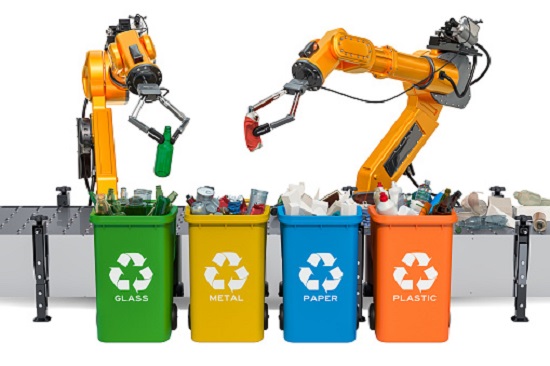
Image from aitrends.com
AI and Robotics for Sorting
One of the biggest challenges in recycling is sorting. Sorting is the process of separating different types of materials from each other, such as plastics, metals, paper, glass, etc. Sorting is essential for ensuring the quality and purity of recycled materials, which affects their value and end-use.
However, sorting is also a labor-intensive, costly, and error-prone task. Manual sorting requires a lot of workers, who have to deal with health and safety risks, such as exposure to hazardous substances or sharp objects. Automated sorting systems, such as optical sorters or magnets, can help reduce human intervention, but they are not always accurate or efficient. For example, they may miss some items that are too small, too dirty, or too similar in color or shape to other materials.
This is where AI and robotics come in. AI is the ability of machines to perform tasks that normally require human intelligence, such as learning, reasoning, or decision making. Robotics is the branch of engineering that deals with the design, construction, operation, and application of robots. By combining AI and robotics, tech startups are creating smart sorting systems that can identify and separate different types of materials with high accuracy and speed.
For instance, Wecyclers² is a Nigerian company that uses AI and robotics to sort plastic waste from households. Wecyclers collects plastic waste from registered users through a mobile app or SMS service. The users receive incentives such as cash or vouchers for their waste. Wecyclers then uses computer vision and machine learning to recognize different types of plastics based on their shape, color, texture, or logo. Then it uses robotic arms with suction cups to pick up and place the plastics into different bins. The system can sort up to 50 items per minute per robot², which is much faster than human workers.
RecyclePoints³, a Nigerian company, serves as another example of how AI and robotics can revolutionize waste management. By employing advanced technology, RecyclePoints effectively sorts through various types of waste collected from households. Registered users can conveniently dispose of their waste through a mobile app or SMS service, earning redeemable points as a reward. By utilizing sensors and algorithms, RecyclePoints analyzes the waste stream, distinguishing different materials based on their size, shape, weight, and composition. The company employs robotic arms equipped with grippers to efficiently sort these materials into distinct categories. Remarkably, each robot³ can sort up to 100 items per minute, surpassing the productivity of human workers.
AI and Robotics for Processing
Addressing the processing challenge in recycling is another crucial aspect where AI and robotics play a remarkable role. Processing involves multiple steps tailored to the specific material, such as cleaning, shredding, melting, extruding, molding, among others. It ensures the quality and functionality of recycled materials, affecting their marketability and usability.
Nevertheless, processing remains a complex, resource-intensive, and wasteful undertaking. The need for considerable equipment contributes to high operational costs, making it economically demanding. Additionally, processing amplifies energy consumption, furthering greenhouse gas emissions and environmental impact. Moreover, by-products generated during processing, such as dust, sludge, or emissions, pose risks to both human health and the environment.
This is where the integration of AI and robotics becomes pivotal. Leveraging these technologies, we witness the rise of intelligent processing systems developed by tech startups aimed at improving efficiency, quality, and sustainability. The application of AI and robotics empowers these systems to optimize parameters, monitor performance, and proactively prevent errors or defects.
Romco Metals offers an exemplary instance of how AI and robotics revolutionize the processing of metal waste in Nigeria. By employing these advanced technologies, Romco Metals transforms metal waste into new products with various applications in construction, medicine, and car-making. Through their proprietary melting process, controlled by AI and robotics, the company efficiently converts metal waste into liquid metal. The system smartly adjusts temperature, pressure, and flow rate, optimizing product yield and quality. This energy-efficient and eco-friendly process remarkably generates no waste or emissions.
Similarly, Ecofuture capitalizes on the power of AI and robotics to process plastic waste into new materials. Their innovative extrusion process, backed by patented technology, converts plastic waste into thermoplastic composites. AI and robotics efficiently facilitate the sorting, shredding, melting, and blending of plastic waste to create a homogeneous mixture. This sustainable process not only reduces landfill impact but also minimizes greenhouse gas emissions.
AI and Robotics for End-Use
A final challenge in recycling is end-use. End-use is the process of incorporating recycled materials into new products or applications. End-use is crucial for creating a circular economy, which is a system that minimizes waste and maximizes resource efficiency. End-use is also beneficial for reducing the demand for virgin materials, which can save costs and resources.
However, end-use is also a difficult and uncertain task. End-use requires a lot of collaboration and coordination between different stakeholders, such as recyclers, manufacturers, consumers, regulators, etc. End-use also faces a lot of barriers and risks, such as lack of standards, regulations, or incentives; low quality, performance, or durability of recycled materials; or low awareness, acceptance, or demand from consumers.
This is where AI and robotics come in. AI and robotics can help facilitate end-use by improving communication, traceability, and innovation. By using AI and robotics, tech startups are creating smart end-use systems that can connect, track, and create new products or applications with recycled materials.
For example, Recycleye is a Nigerian company that uses AI and robotics to connect recyclers with manufacturers. Recycleye uses computer vision and machine learning to identify and certify the quality and quantity of recycled materials. Then it uses blockchain technology to create a secure and transparent platform that connects recyclers with manufacturers who need recycled materials. The platform also provides data and insights on the environmental and social impact of recycling.
Another example is Replenysh, a Nigerian company that uses AI and robotics to create new products with recycled materials. Replenysh uses computer vision and machine learning to design and manufacture customized products with recycled materials, such as clothing, accessories, or furniture. Then it uses e-commerce technology to sell these products directly to consumers or businesses. The company also provides data and feedback on the customer satisfaction and loyalty of recycling.
Image from legit.ng
Conclusion
Recycling is a vital solution to the problem of waste management and environmental degradation in Nigeria and Africa, but it faces many challenges, such as low awareness, access, and quality. Tech startups are using AI and robotics to make recycling more efficient, by improving sorting, processing, and end-use of recycled materials. These innovations have the potential to create jobs, reduce pollution, save costs, and support a circular economy.
If you are interested in learning more about these tech startups or how you can support recycling in your community, please visit their websites or contact them directly. You can also check out some of the resources below for more information on recycling:
World Bank: Learn about the state of waste management in Africa and the opportunities for recycling.
Global Recycling Day: Find out how this initiative celebrates recycling heroes around the world and promotes recycling as a key solution for sustainable development.
African Circular Economy Network: Discover how this network connects stakeholders across Africa who are working towards a circular economy.
Recycling is not only good for the planet, but also for your wallet, your health, and your future. By using AI and robotics, tech startups are making recycling easier, faster, and more profitable than ever before. So what are you waiting for? Join the recycling revolution today!
Have you ever wondered what makes us human? What sets us apart from the machines that we create and use? In this blog post, we will explore some of the unique aspects of human intelligence that give us an edge over artificial intelligence (AI), even as AI becomes more advanced and ubiquitous. We will look at some of the limitations and challenges of AI, and how humans can leverage their strengths to complement and collaborate with AI. Here are some of the topics we will cover:
The difference between human and artificial intelligence
The importance of common sense, creativity, and empathy for human intelligence
The potential benefits and risks of AI for society and work
The ways humans can enhance their intelligence and skills in the age of AI
Image taken from thriveglobal.com
The difference between human and artificial intelligence
Artificial intelligence is a broad term that refers to the ability of machines to perform tasks that normally require human intelligence, such as reasoning, learning, decision making, and problem solving. AI can be classified into two types: narrow AI and general AI. Narrow AI is focused on specific domains or tasks, such as playing chess, recognizing faces, or translating languages. General AI is the hypothetical ability of machines to exhibit intelligence across any domain or task, similar to or beyond human intelligence.
While narrow AI has made remarkable progress in recent years, thanks to advances in computing power, data availability, and machine learning algorithms, general AI remains elusive and controversial. Some experts believe that general AI is possible and inevitable, while others doubt that machines can ever achieve the same level of intelligence as humans.
One of the main reasons why general AI is hard to achieve is that human intelligence is not just a matter of computation or logic. Human intelligence is also influenced by factors such as emotions, intuition, creativity, social skills, and common sense. These factors enable humans to understand complex situations, adapt to changing environments, generate novel ideas, and collaborate with others. These factors are also difficult to replicate or simulate by machines.
Humans have common sense
The importance of common sense, creativity, and empathy for human intelligence
Common sense is the ability to use practical knowledge and experience to make sensible judgments and decisions in everyday situations. Common sense helps humans to avoid absurd or dangerous actions, infer implicit information, fill in missing details, and cope with uncertainty. Common sense is often taken for granted by humans, but it is challenging for machines to acquire and apply.
One of the reasons why common sense is hard for machines is that it requires a large amount of background knowledge about the world and how it works. This knowledge is often implicit, contextual, and subjective, which makes it difficult to formalize or encode in a way that machines can understand. Another reason is that common sense involves reasoning about causality, morality, intentions, goals, and beliefs, which are not easily captured by mathematical models or algorithms.
Humans are creative
Creativity is the ability to produce original and valuable ideas or products that solve problems or satisfy needs. Creativity helps humans to innovate, discover, invent, and express themselves in various domains such as science, art, literature, music, and business. Creativity is often associated with inspiration, imagination, intuition, and insight. Creativity is also influenced by factors such as motivation, personality, culture, and environment.
Creativity poses a challenge for machines due to a couple of factors. Firstly, it demands the ability to think outside the box and delve into various possibilities, which machines struggle with. They tend to adhere to predetermined rules or procedures, restricting their exploration and constraining their outputs. Furthermore, creativity entails the capacity to assess and acknowledge the quality and significance of ideas or products. Machines lack the subjective benchmarks or criteria employed by humans to evaluate creativity.
The power of empathy
The power of empathy lies in its capacity to comprehend and embrace the emotions, thoughts, and viewpoints of those around us. By exercising empathy, we enable ourselves to establish effective lines of communication, establish trust and rapport, and foster cooperation and collaboration with others. Moreover, empathy enables us to genuinely care about the welfare of others and to act in an ethical and compassionate manner. This ability is often influenced by our emotional states, individual traits such as agreeableness, and the social norms and values we adhere to.
Empathy proves to be a challenge for machines due to several factors. Firstly, emotional recognition and expression play a crucial role, which machines struggle to grasp. The intricate cues like facial expressions, body language, tone of voice, and contextual understanding that humans effortlessly utilize to communicate their emotions are not easily detectable or interpretable by machines. Furthermore, machines lack the innate capacity to generate and exhibit appropriate emotions that align with specific situations and intended audiences.
Another hurdle lies in empathy’s reliance on perspective-taking and theory of mind. Machines encounter difficulties in deducing and simulating the mental states of others, including beliefs, desires, intentions, and expectations. Unlike humans who draw reference from personal experience and history to establish connections with others, machines lack this essential human aspect, making empathy even more elusive.
The potential benefits and risks of AI for society and work
The potential of AI is immense in terms of benefits it offers to society and the workplace. It has the capability to boost productivity, efficiency, quality, innovation, and convenience. Moreover, AI can play a pivotal role in finding solutions to critical challenges that humanity confronts, including climate change, poverty, healthcare, education, and security.
However, AI also poses some risks and challenges that needs to be carefully managed and mitigated. Some of these risks and challenges include:
Ethical and moral issues, such as bias, discrimination, privacy, accountability, transparency, and human dignity
Social and economic issues, such as unemployment, inequality, polarization, and social cohesion
Legal and regulatory issues, such as liability, responsibility, ownership, and governance
Technical and security issues, such as reliability, robustness, safety, and malicious use
How humans can enhance their intelligence and develop their skills in the age of AI
In order to reap the benefits and avoid the risks of AI, humans need to enhance their intelligence and skills in the age of AI. Some of the ways humans can do this include:
Learning to use AI tools and systems effectively and responsibly, by acquiring digital literacy, data literacy, and AI literacy
Learning to collaborate with AI tools and systems efficiently and harmoniously, by developing human-AI interaction skills, such as communication, coordination, and feedback
Learning to complement AI tools and systems creatively and empathetically, by leveraging human strengths, such as common sense, creativity, and empathy
Learning to adapt to AI tools and systems continuously and proactively, by embracing lifelong learning, reskilling, and upskilling
Conclusion
Artificial intelligence (AI) possesses immense potential to revolutionize society and the workplace, however, it also presents certain limitations and obstacles that necessitate attention. Humans possess a certain advantage over AI in specific intellectual domains, such as practical wisdom, imaginative thinking, and emotional understanding, which are crucial for resolving intricate issues and generating value in our world. In order to flourish in the era of AI, individuals can effectively augment their intellect and expertise by acquiring the proficiency to utilize, cooperate with, complement, and adapt to AI tools and systems. This proactive approach ensures that humans continue to remain pertinent and competitive as AI becomes increasingly prevalent.
Are you prepared to seize the prospects and face the obstacles presented by AI? Are you interested in gaining a deeper understanding of how to improve your intellect and abilities in the era of AI? If that’s the case, we encourage you to subscribe to our blog and share your valuable insights in the comments section.






















 Chibzy Tech Blog